In this post
Lorem ipsum dolor sit amet
Lorem ipsum dolor sit amet
Most HR teams don’t set out to run benefit packages through spreadsheets and inbox threads. It’s a time-consuming endeavor that grows until administration becomes harder to manage than the benefits themselves.
The result is predictable: You end up with manual data entry work, inconsistent figures, and more employee questions than your team can keep up with.
Benefits administration software can fix that, but not every platform solves the same problems. Some reduce manual work. Others improve the employee experience. A few give you the visibility and control needed to manage benefits at scale. The stakes are high for employers evaluating these systems. SHRM’s 2025 Employee Benefits Survey found that 88% of employers rated health-related benefits as very or extremely important, while 81% said the same about retirement savings and planning benefits.
This guide breaks down how to evaluate benefits administration software, what features matter most for benefits management, and how seven leading platforms compare so you can choose the right fit for your team.
What is benefits administration software, and why do you need it?
Benefits administration software centralizes your employee benefits program, from open enrollment and qualifying life events to compliance reporting and carrier data feeds. It helps simplify the entire benefits enrollment process. Instead of managing separate vendor portals, you work from a single system that keeps data consistent across payroll systems, HRIS, and insurance carriers.
That shift shows up in a few beneficial ways. Your team spends less time fixing errors and reconciling data. Compliance tasks like ACA and COBRA are easier to manage. And employees are more likely to use their benefits when they can access them without confusion or delays.
Further, employer-sponsored coverage is still a core part of compensation. In March 2024, 72% of private industry workers had medical care benefits, according to the U.S. Bureau of Labor Statistics.
How to choose the right benefits administration software
Choosing the wrong platform creates more work and can complicate your overall benefits process. It leads to manual workarounds, data errors, and employees who rely on HR to access their benefits. A structured evaluation process helps you avoid those issues and build a clear recommendation for leadership.
You can make your evaluation in the following steps:
- Step 1: Define your requirements before engaging vendors. Document the scope of your benefits plans, employee population and locations, required payroll and HRIS integrations, unique needs regarding compliance, and total budget, including implementation and ongoing support.
- Step 2: Assemble your evaluation team. Include benefits, payroll, IT security, and finance stakeholders. Consider adding employee representatives to flag usability gaps early.
- Step 3: Set a realistic evaluation timeline. Plan for a four- to six-week process, including two weeks for vendor submissions, two weeks for demos and reference calls, and one week for final scoring and contract discussions.
Essential evaluation criteria
Use these criteria to evaluate the platform’s key features and weigh them based on your organization's priorities:
- Pricing transparency: Ask vendors to explain their full fee structure, including implementation and support costs. Per-employee-per-month models are common, but the total cost of ownership over three years is what matters most for budget planning.
- Integration depth: Verify that the platform syncs bidirectionally with your existing systems in real time, not just one-way data exports that create reconciliation headaches. Ask about the current integration library and API access for custom workflows.
- Employee experience: Request demo accounts so your team can test the enrollment flow and self-service features from an employee's perspective. Platforms that improve the benefits experience make benefit selection easier.
- Compliance automation: Confirm the vendor handles eligibility tracking, ACA reporting, COBRA administration, and state-specific requirements without requiring manual intervention. Ask how they handle regulatory changes and whether updates are automatic.
- Flexibility and scalability: Ensure the platform supports your growth plans, accommodates multiple benefit types, and adapts to policy changes without requiring vendor customization for every adjustment.
- Customer support model: Understand what support is included in your base pricing vs. premium tiers. Ask about response times during open enrollment and whether you'll have a dedicated account manager or a shared support queue.
During demos, ask vendors about real scenarios your team faces: how they handle mid-year plan changes for employees who relocate, or what happens when an employee disputes a declined expense. The quality of those answers tells you more than any feature checklist.
7 best employee benefits software platforms in 2026
Each of these platforms takes a different approach to benefits administration. The right choice depends on your company’s size, how your programs are structured, and how your current systems operate.
1. Benepass
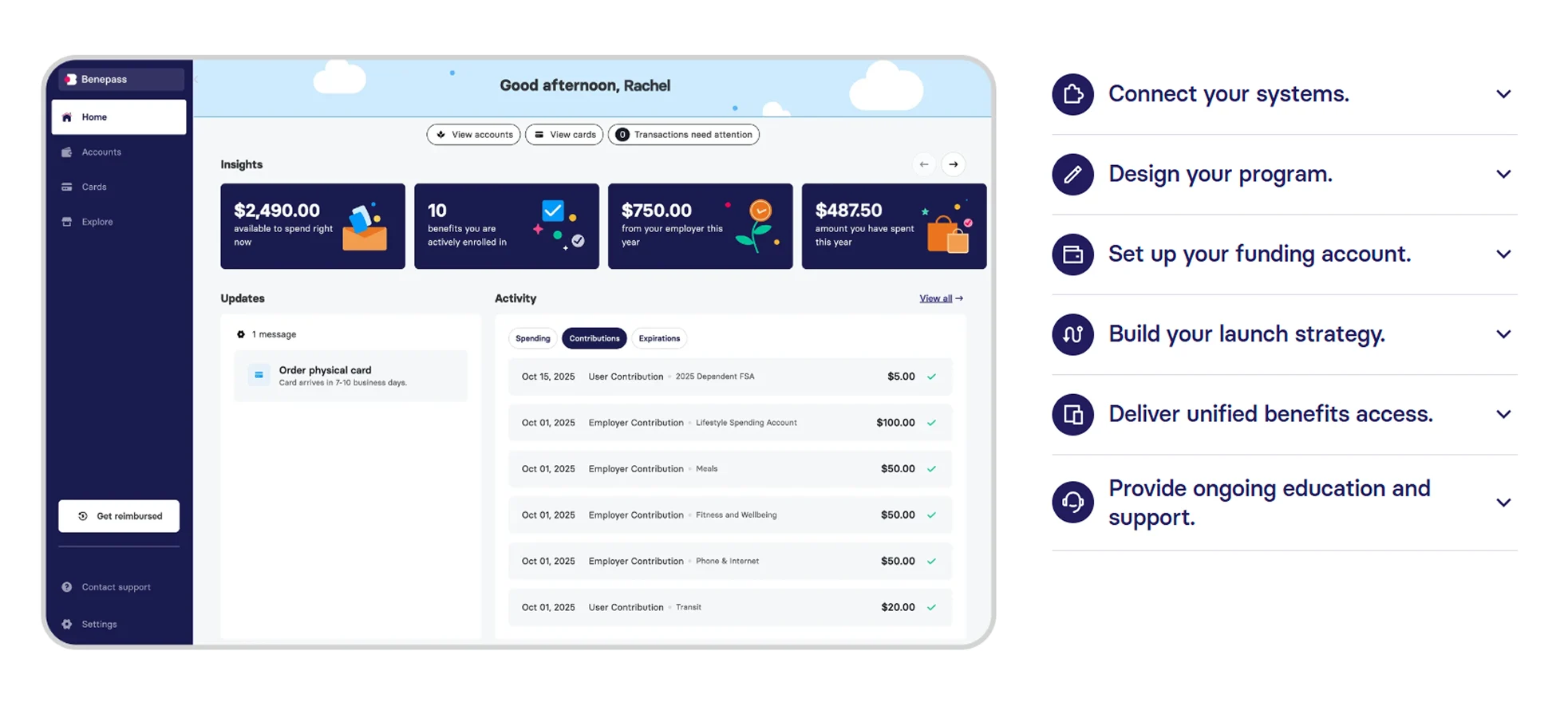
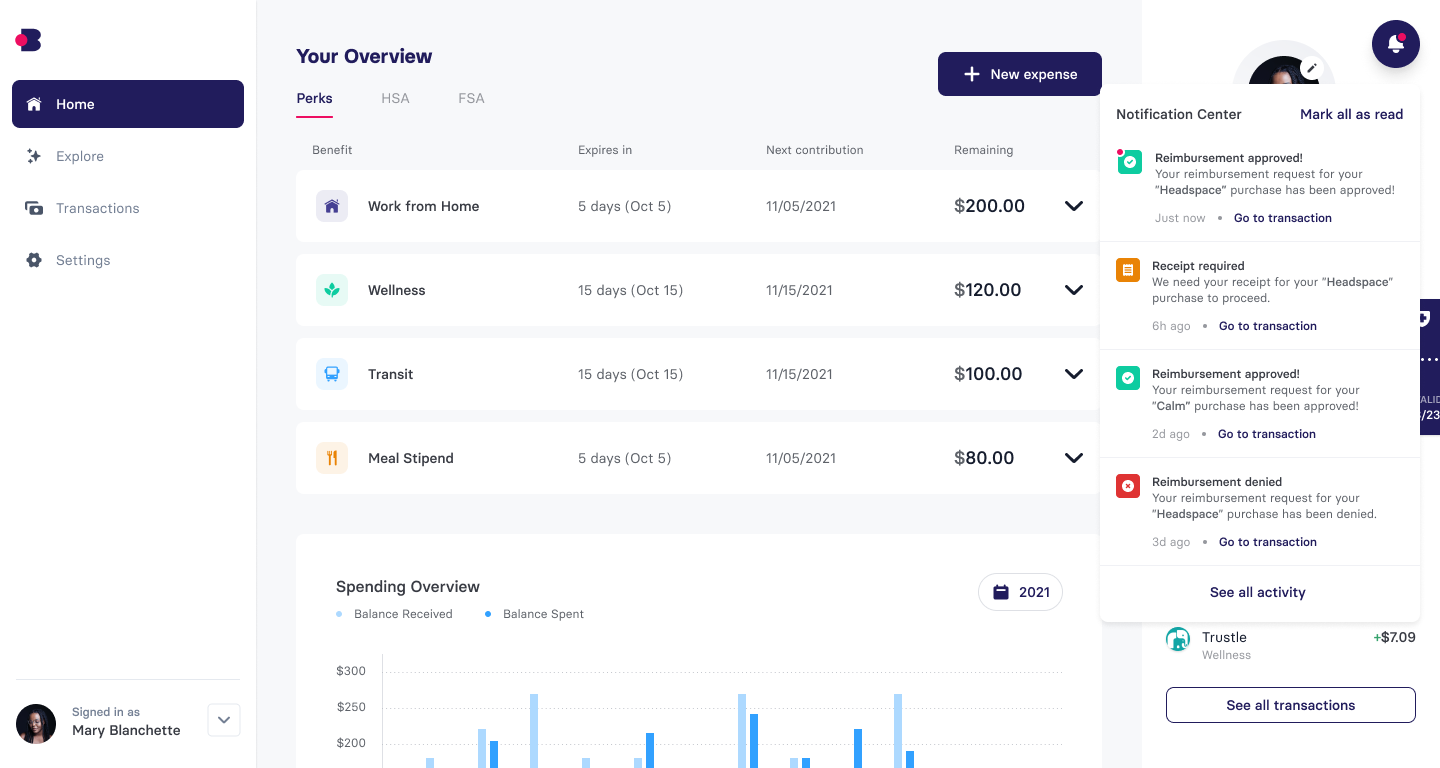
Benepass is a user-friendly specialist benefits platform that centralizes pre-tax benefits and post-tax perks in a single system.
Unlike payroll platforms that added benefits as an afterthought, Benepass was built to support a wide range of modern benefits programs, including:
- HSAs
- FSAs
- Commuter benefits
- Lifestyle spending accounts
- Wellness stipends
- Professional development allowances
One standout feature is its card-first approach, which helps reduce the reimbursement bottleneck that can limit engagement in traditional programs. Employees receive a pre-loaded Benepass Visa card that automatically enforces policy rules at the point of purchase, so they can pay for eligible expenses without submitting receipts or waiting for approval.
2. Rippling
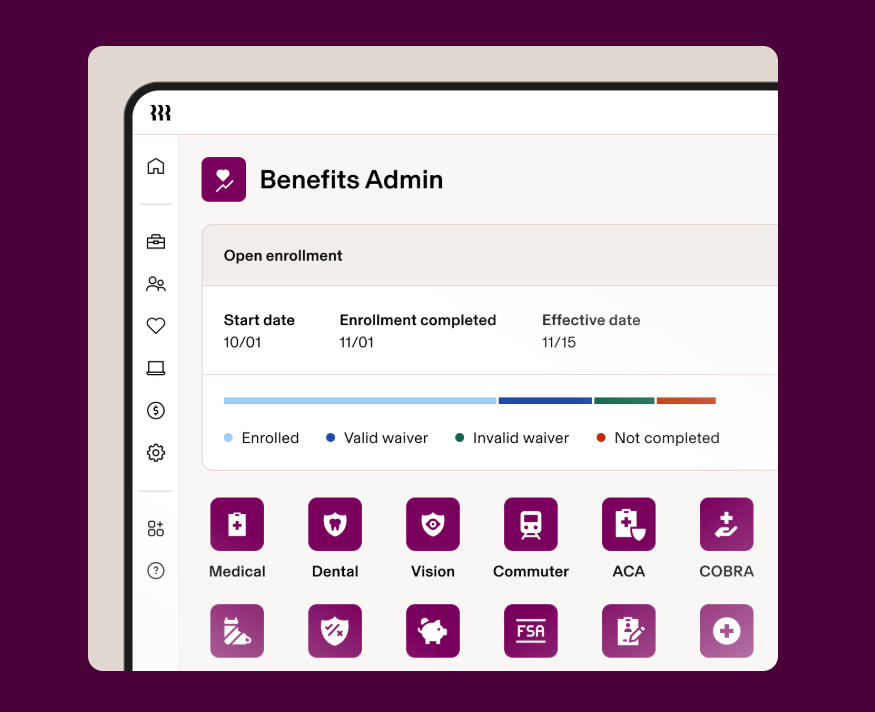
Rippling is a unified HR and IT platform that connects payroll, benefits, device management, and mobile app provisioning through a single employee data model. For organizations already using Rippling for payroll, the benefits module syncs enrollment changes directly with payroll deductions and automatically updates eligibility when employees experience life events.
The platform supports benefits administration for programs such as:
- Health insurance
- 401(k)
- Commuter benefits
- COBRA-related administration
Its primary strength is that updating an employee record in one place flows across connected systems automatically, which can improve benefits management for teams managing benefits across multiple carriers.
3. ADP
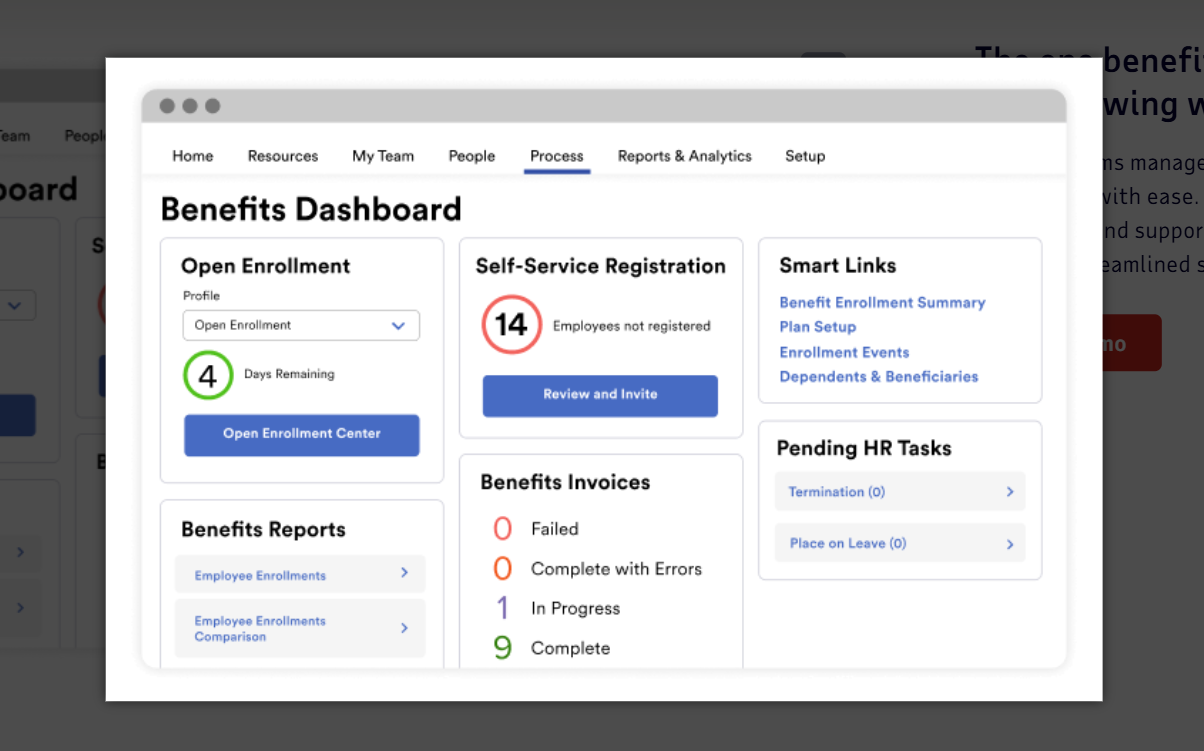
ADP Workforce Now is an enterprise-grade HCM platform built for organizations managing complex, multi-state benefits programs at scale.
The platform’s benefits administration strengths include:
- Connections with 900+ insurance carriers for automated enrollment and billing data exchange
- Automated ACA-related workflows and compliance support
- Benchmarking through ADP DataCloud, which lets teams compare workforce and benefits data against broader peer benchmarks
That benchmarking capability can help employers compare benefits, costs, and employee enrollment patterns against anonymized industry data, which is a differentiator for larger organizations. The tradeoff is complexity, since pricing is customized and the platform’s enterprise focus can create a steeper learning curve for smaller HR teams.
4. Gusto
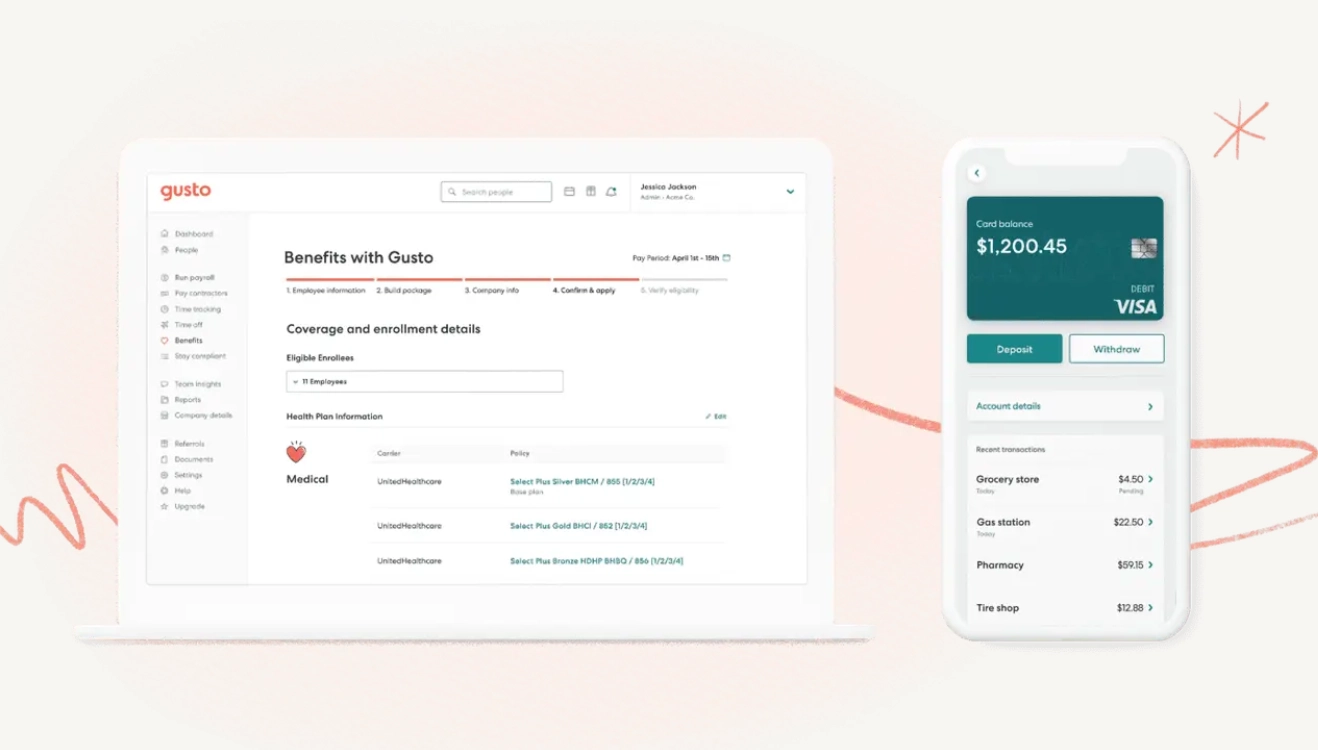
Gusto is a payroll and HR platform designed primarily for small to mid-sized businesses that want to consolidate payroll, compliance, and benefits in one system.
It supports benefits administration for offerings such as:
- Medical insurance
- Dental insurance
- Vision insurance
- 401(k)
- Commuter benefits
Gusto also highlights ACA reporting, HIPAA, and COBRA administration as included within its benefits administration offering. The platform works well for straightforward benefits programs, particularly if you are already using Gusto for payroll and want to reduce vendor count.
Pricing on Gusto’s official pricing page is currently listed at $49 per month plus $6 per person for the Simple plan and $80 per month plus $12 per person for the Plus plan. Outside of payroll admin, which is included, most employee benefits are available as an add-on.
5. BambooHR
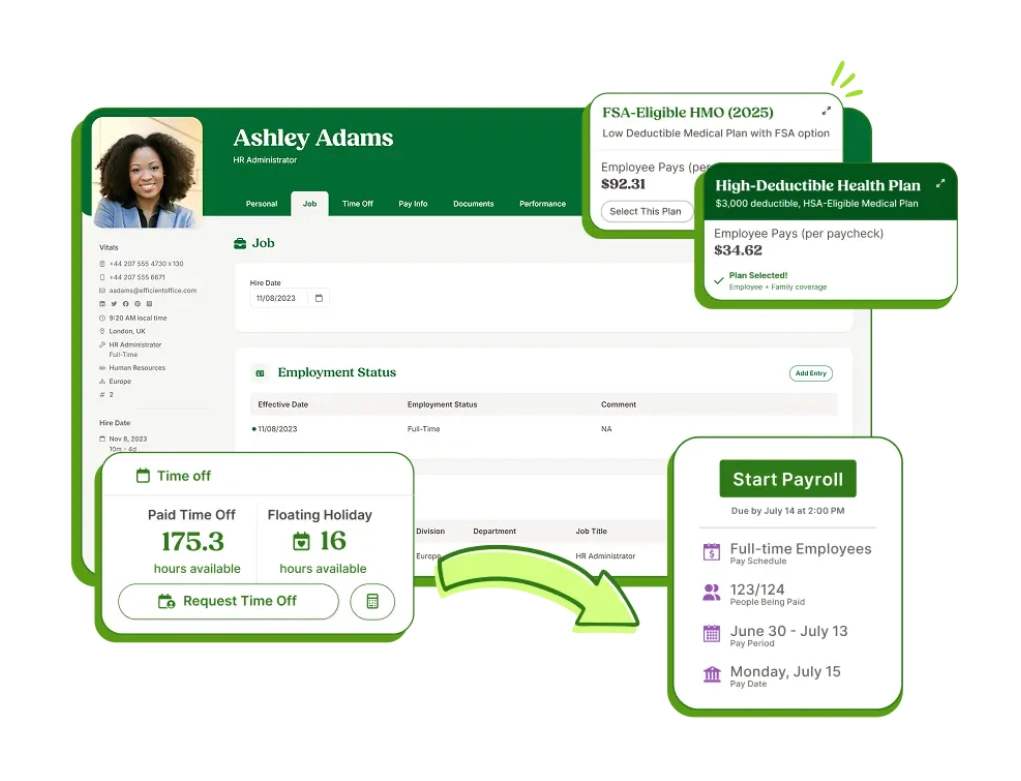
BambooHR is a cloud-based HRIS that offers a Benefits Administration module alongside its core HR management features.
Its benefits administration capabilities include:
- Customizable enrollment windows for open enrollment, new hires, and qualifying life events
- Employee elections are saved to employee records
- Payroll deduction syncing when used with BambooHR Payroll
- Carrier connections and enrollment management tools
For organizations already using BambooHR for core HR functions, the benefits module extends the platform without requiring a separate vendor relationship. Benefits Administration is an add-on module, and pricing is available by quote.
6. Deel
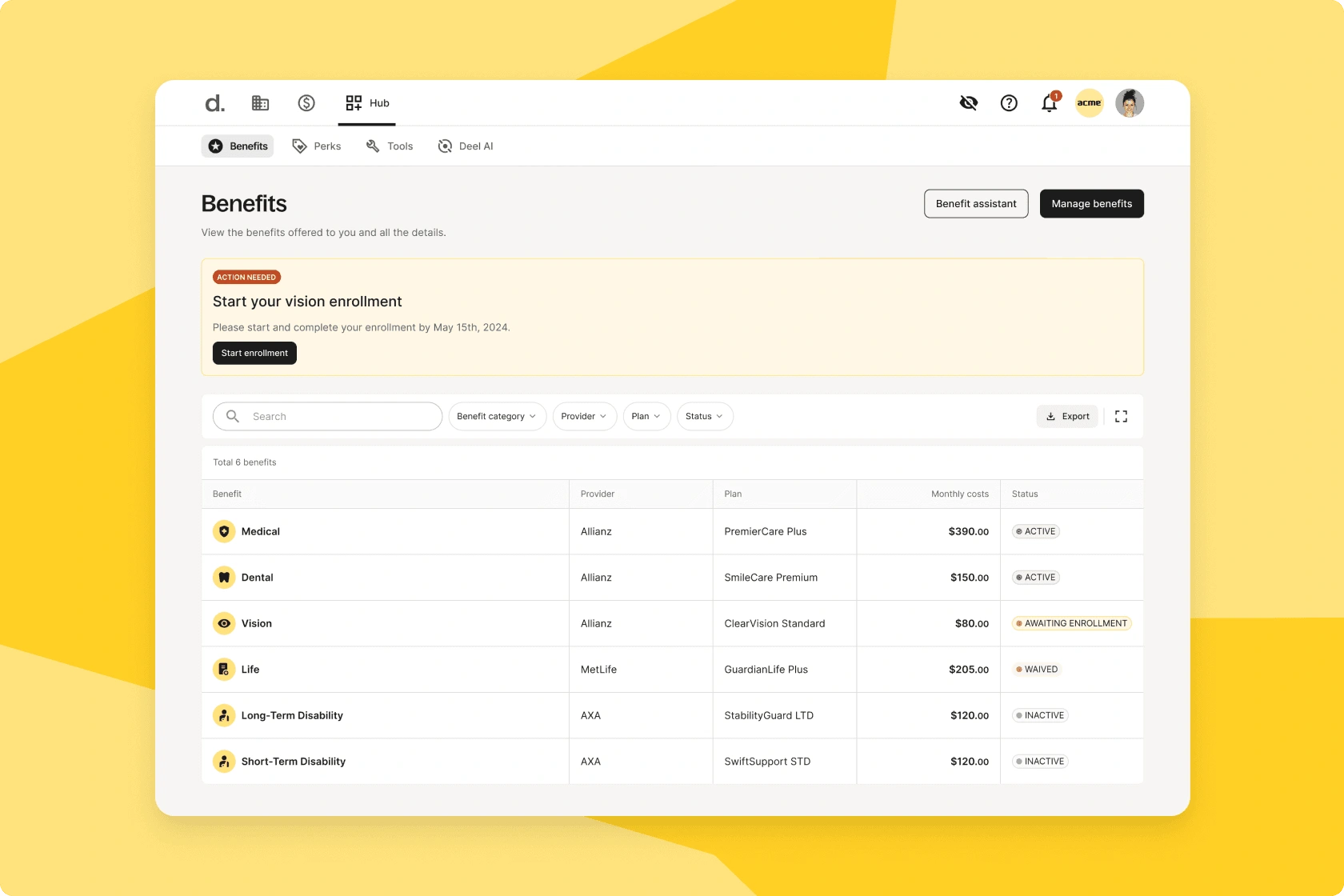
Deel is a global HR platform that combines payroll, compliance, and benefits administration for distributed teams.
Its benefits-related strengths include:
- Localized benefits administration tailored to the country, state, or region
- Support for country-specific deductions and contributions
- Centralized management through a single HR platform
- Access to benefits through Deel’s EOR and payroll infrastructure
Its capabilities are especially relevant for companies with international employees who need localized packages and centralized administration in a single dashboard. For US-based employees, Deel also markets access to localized benefits within its platform. The platform is best suited to organizations already using Deel Payroll or EOR services. Deel’s Employer of Record pricing starts at $599 per employee per month.
7. GoCo
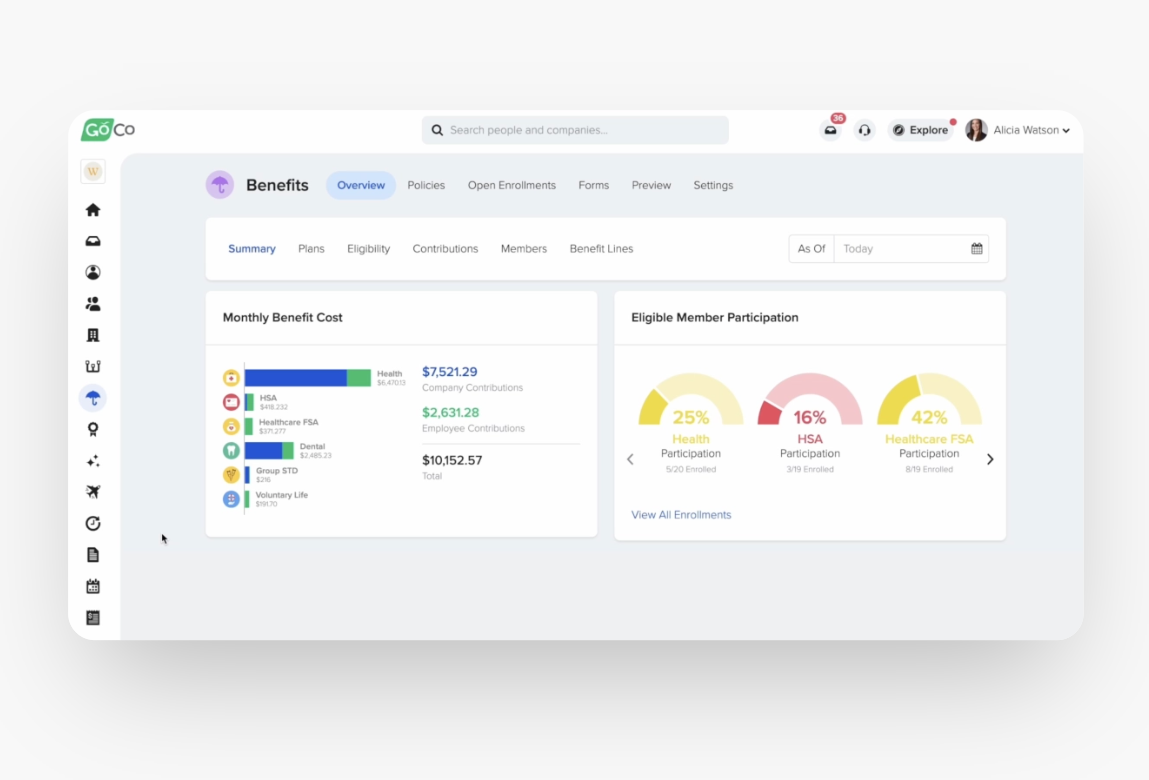
GoCo is an all-in-one HR platform that was acquired by Intuit in 2025. It combines benefits administration with onboarding, payroll, and compliance tools.
Its benefits administration capabilities include:
- Automatic notifications when employees become eligible for benefits
- Online enrollment workflows
- Automatic deduction calculations
- Payroll syncing
- Carrier integrations that help exchange enrollment data and reduce manual entry errors
GoCo works well for teams seeking to consolidate HR, payroll, and benefits into a single system.
Implementation best practices for benefits administration software
Selecting the right platform is only half the work. Adoption depends on how you roll it out, which you can do in seven steps:
- Step 1: Set expectations for the implementation timeline. Many implementations take four to eight weeks, depending on your size and program complexity.
- Step 2: Start with data migration and system setup. The first few weeks typically focus on these tasks. Before you move anything, audit your existing benefits data. Clean inputs reduce errors and speed up the transition.
- Step 3: Run both systems in parallel for a short period. This gives your team time to validate payroll deductions, eligibility rules, and carrier data before fully switching over.
- Step 4: Communicate with employees before go-live. Employees need context before launch, not after. Send a preview two to three weeks in advance that explains what’s changing and where to go for help.
- Step 5: Follow up with task-specific guidance. Share clear instructions for common tasks like logging in and enrolling.
- Step 6: Plan for the most common rollout issues. These usually include skipping the parallel run, underestimating configuration time, and failing to train admins before launch.
- Step 7: Build in time for testing and support. Make sure your vendor’s support team is available during your first open enrollment cycle.
How Benepass delivers modern benefits administration
Most benefits teams face the same issues: too many systems, too much manual work, and low employee engagement.
Benepass addresses this by bringing pre-tax benefits and post-tax programs into a single system. Your team manages everything in one place rather than reconciling data across multiple vendors.
Employees get a single card they can use at the point of purchase, with eligibility rules applied automatically. That removes the reimbursement process and makes benefits easier to use day to day.
For your team, that means:
- Less manual work and fewer reconciliation issues
- Built-in compliance support across pre-tax programs
- Real-time visibility into utilization, spend, and enrollment
Teams also use Benepass to launch flexible programs without adding new vendors. For example, companies can offer lifestyle spending accounts that cover categories like fitness, mental health, and professional development, all within the same system.
Schedule a demo to walk through the platform, review reporting, and understand what implementation would look like for your team.

Frequently Asked Questions


Rebecca Noori
Rebecca Noori is a freelance HR Tech and SaaS writer who is obsessed with our world of work. She writes about everything from employee benefits and performance management to upskilling and productivity tips. When she's not writing, you'll find her grappling with phonics homework and football kits, looking after her three kids.