In this post
Lorem ipsum dolor sit amet
Lorem ipsum dolor sit amet
Return-to-office mandates create real work for HR teams, and they land at the same time commuting costs are climbing. Employees are feeling both sides of that at once: more in-office days to plan around, and a bigger dent in their paycheck just to get there.
Driving to work in New York City now costs commuters $5,908 a year in gas, tolls, and vehicle maintenance, according to a 2025 analysis from Mercury Insurance, and workers in other major metros aren't far behind. A commuter FSA gives HR leaders a concrete pre-tax vehicle to ease that burden for employees, while also lowering the company's own payroll tax liability.
This guide covers what a commuter flexible spending account (FSA) is, how the accounts work day to day, the new 2026 IRS limits, and what to do to set one up for your team. If pre-tax limits don't stretch far enough for costs like rideshare, gas, or micro-mobility, the 2026 Benepass Benefits Benchmarking Report also breaks down how employers are pairing commuter FSAs with a post-tax commuter LSA.
What is a commuter FSA?
A commuter FSA is a pre-tax benefit account governed by Section 132(f) of the Internal Revenue Code, which excludes qualified transportation fringe benefits from taxable wages.
It works differently from a healthcare FSA. Healthcare FSAs are subject to a use-it-or-lose-it rule tied to the plan year, and employees generally can't change their election outside of open enrollment or a qualifying life event. A commuter FSA has neither restriction. Balances roll from month to month as long as the employee stays enrolled, and elections can go up or down monthly without any life event required.
Commuter FSAs also split into two distinct sub-accounts:
- A transit account, which includes vanpooling
- A qualified parking account
Each one carries its own monthly IRS limit, and employees can enroll in one or both, depending on how they get to work.
How does a commuter FSA work?
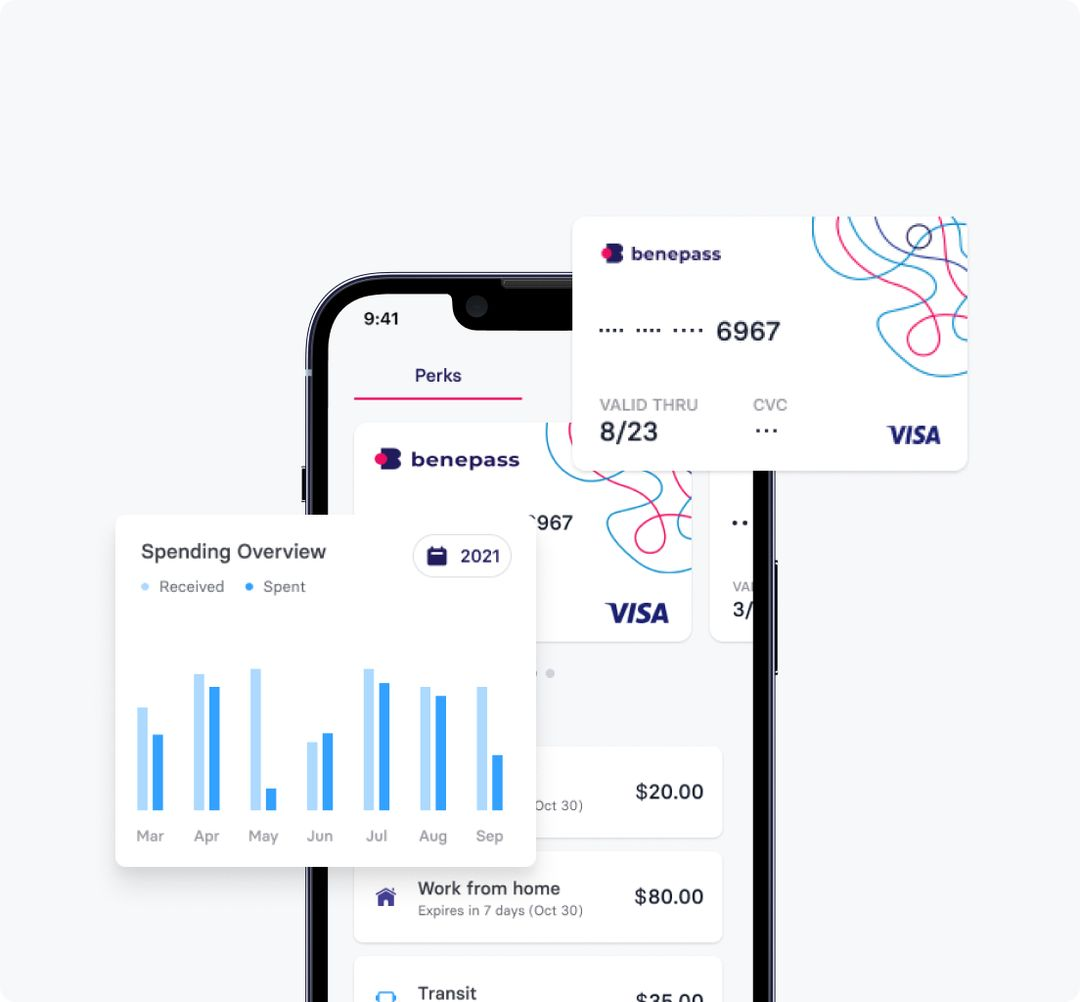
The mechanics are simple. Employees choose a monthly contribution amount for transit, parking, or both, and that amount comes out of their paycheck before taxes are calculated. Most plans give employees a benefits debit card preloaded with their election each month, though some administrators still process reimbursement claims for eligible receipts.
Employers can also contribute to either sub-account, up to the same monthly IRS limit, on top of what the employee elects. Employer contributions reduce the employer's own FICA liability, since that money never counts as taxable wages in the first place.
One rule catches HR teams off guard: unused commuter FSA balances do not transfer or pay out in cash when an employee leaves the company. If someone is planning to exit, encourage them to reduce or zero out their election in the weeks before their last day, so they aren't leaving money behind.
The tax math is straightforward, and it's worth spelling out for employees who assume the benefit is only marginally useful. An employee in the 22% federal tax bracket who elects the full $340 monthly transit limit avoids federal income tax on that amount, plus the 7.65% combined Social Security and Medicare tax. Over a full year, that adds up to roughly $1,200 in savings on money the employee was already going to spend getting to work.
2026 commuter FSA contribution limits
Under Section 132(f), the IRS raised the 2026 commuter FSA limits to $340 per month for transit passes and vanpooling, and a separate $340 per month for qualified parking, up from $325 in 2025. Since the two sub-accounts are tracked separately, an employee can set aside up to $4,080 a year in each category, or $8,160 combined if they use both.
Those federal limits are only part of the picture. A growing list of states and cities require covered employers to offer commuter benefits at all, and the thresholds vary by jurisdiction. New York City and New Jersey require it once an employer has 20 or more employees working there, while Illinois's Chicago-area mandate and the wider San Francisco Bay Area program kick in at 50 or more employees. It's worth checking jurisdiction by jurisdiction, since a company can be exempt in one city and covered in the next.
Hybrid work has also changed how employees actually spend their commuter dollars. According to the 2026 Benepass Benefits Benchmarking Report, employees with access to both transit and parking benefits put 66% toward transit and 27% toward parking, reflecting how variable in-office schedules have become.
Some employers are also layering on commuter lifestyle spending accounts to cover what the pre-tax limits don't. Right now, 17% of employers offer a commuter LSA alongside their pre-tax account, averaging $2,400 a year, to help with gas, tolls, and rideshares that fall outside Section 132(f).
Commuter FSA eligible expenses
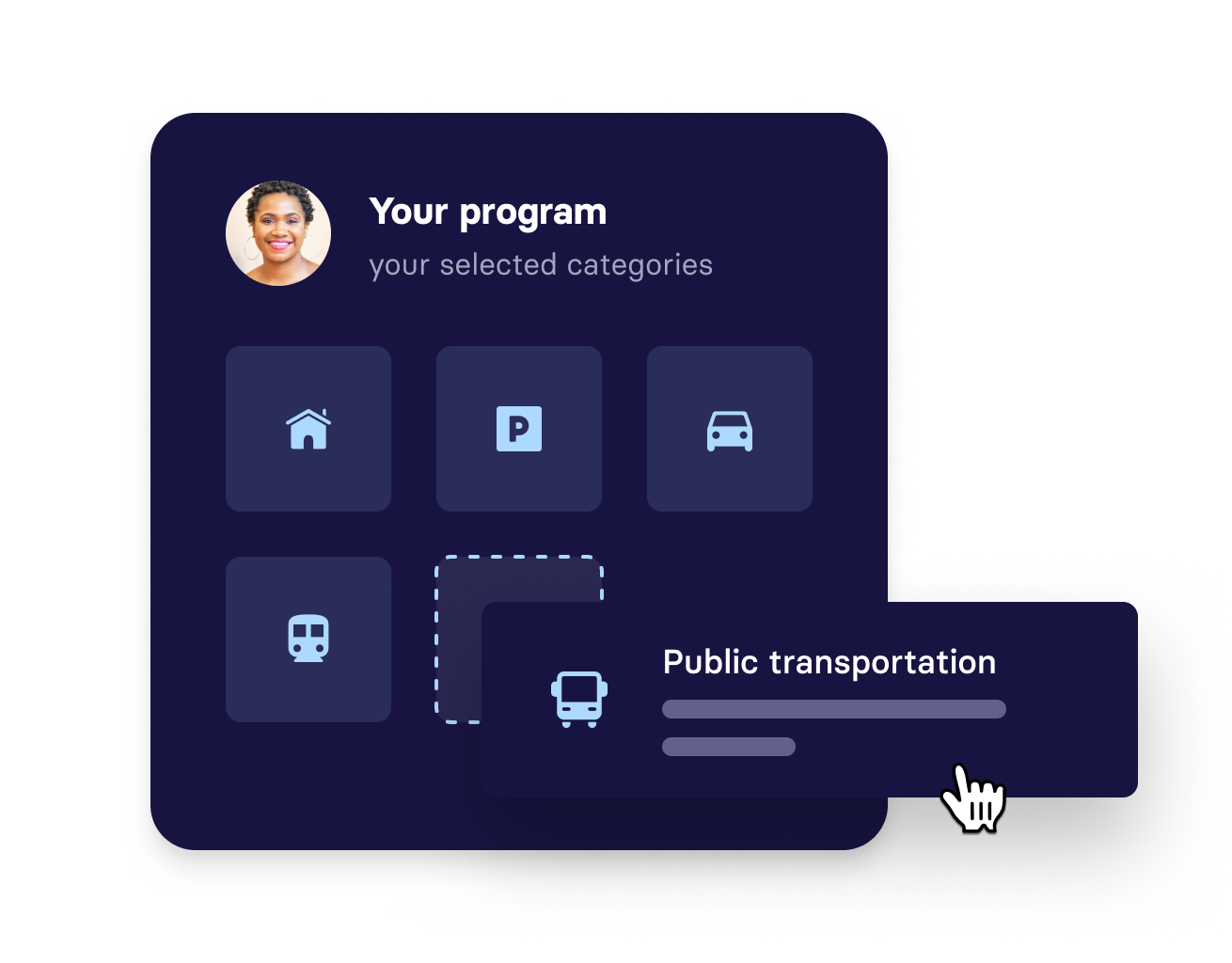
The IRS splits eligible expenses into the same two categories as the account itself: transit and parking.
Transit-eligible expenses
Transit-eligible expenses cover the cost of getting to work by shared or public transportation, including:
- Bus, subway, rail, and ferry fares
- Transit passes, tokens, fare cards, and vouchers
- Vanpooling in a qualifying commuter highway vehicle, generally one that seats at least six adults besides the driver and is used mostly for commuting
Rideshare trips like Uber or Lyft don't qualify unless the ride meets the IRS definition of vanpooling.
Parking-eligible expenses
Parking-eligible expenses cover the cost of parking at or near work, or at a location an employee uses to catch transit or a vanpool, including:
- Parking garages and lots at or near the workplace
- Metered parking near the office
- Parking at a train station, park-and-ride lot, or vanpool pickup point
Parking at or near an employee's home never qualifies, even if they use that spot to switch to transit.
Who is eligible for a commuter FSA?
Commuter FSA eligibility is narrower than it looks. Only W-2 employees of an employer that offers the benefit can enroll. Self-employed individuals, independent contractors, 2% S-corp shareholders, and an employee's spouse or dependents are all excluded, regardless of how closely they work with the company.
Federal law doesn't set a minimum-hours threshold for commuter FSA eligibility the way some mandate laws do. If a company offers the benefit, part-time and full-time W-2 employees can generally both enroll, as long as the plan itself doesn't restrict eligibility further. Mandate jurisdictions are a separate question. Those laws set their own hour and headcount thresholds for who must be offered the benefit, which is why it's worth checking local requirements even after a company has decided to offer a commuter FSA voluntarily.
It's also worth calling out how commuter FSAs sit outside typical Section 125 cafeteria plan rules. Healthcare FSAs and other cafeteria plan benefits generally lock employees into their election for the plan year unless they have a qualifying life event. Commuter FSAs don't work that way. Because they fall under Section 132(f) rather than Section 125, employees can raise, lower, or stop their commuter election in any month, which makes them easier to manage as an employee's commute changes throughout the year.
How HR leaders can set up a commuter FSA
Setting up a commuter FSA involves a handful of operational decisions.
- Select a third-party administrator that can support both transit and parking sub-accounts, along with card-based access, so employees don't have to file claims for everyday expenses. Modern pre-tax platforms increasingly bundle this kind of card-first experience with other pre-tax accounts, not just commuter benefits.
- Decide whether the company will contribute anything on top of the employee election, and how that contribution fits into the broader flexible benefits package.
- Configure payroll deductions so pre-tax elections sync correctly with each pay cycle, and confirm the setup with payroll before the first deduction runs.
- Communicate the benefit clearly during open enrollment and again at onboarding, since employees who understand a pre-tax benefit are far more likely to actually enroll and use it.
Don't skip the compliance check. If the company has employees working in a mandate jurisdiction, confirm the plan meets that jurisdiction's specific requirements before open enrollment, not after.
Managing all of this gets harder as a company adds more benefit types and more locations. Benepass administers commuter accounts alongside pre-tax and flexible benefits on one platform and one card, so HR teams aren't juggling separate vendors for transit, parking, and everything else in the benefits stack.
Ready to see it in action?
If you want to see how a single platform can handle commuter, pre-tax, and flexible benefits together, cut vendor sprawl, and keep employees from leaving money on the table, book a demo with Benepass.
Frequently asked questions about commuter FSAs
Can employees have a commuter FSA and a healthcare FSA at the same time?
Yes. A commuter FSA falls under Section 132(f), while a healthcare FSA falls under Section 125, so the two accounts run independently of each other. An employee can enroll in both at once, elect contributions to each separately, and use them for their own distinct set of eligible expenses without one affecting the other.
What happens to unused commuter FSA funds when an employee leaves?
Unused commuter FSA funds do not transfer or pay out in cash when an employee leaves the company. Any balance left in the transit or parking sub-account at termination is forfeited. Employees who know they're leaving should lower or stop their election in advance so they aren't setting aside money they won't be able to use.
Can employees change their commuter FSA contribution during the year?
Yes. Unlike a healthcare FSA, which generally locks in an employee's election for the plan year, a commuter FSA allows changes every month. Employees can raise, lower, or stop their transit or parking election at any time, which makes it easier to match contributions to an actual commute that changes throughout the year.

Frequently Asked Questions