In this post
Lorem ipsum dolor sit amet
Lorem ipsum dolor sit amet
Benefits administration costs have climbed steadily over the past decade, yet employee utilization of available benefits remains stubbornly low. Benefits data sits at the intersection of multiple compliance regimes, and that complexity keeps growing as workforces span more jurisdictions. For mid-market and enterprise HR leaders, the pressure to do more with less has made re-evaluating the benefits technology stack a genuine priority.
This guide cuts through the vendor noise. You'll find clear definitions of what employee benefits technology actually does, a breakdown of the four platform categories you'll encounter, the core capabilities that separate modern platforms from legacy systems, and a structured framework for making a defensible technology decision.
What is employee benefits technology?
Employee benefits technology is the category of software employers use to fund, administer, and deliver benefits programs to their workforce. It's distinct from your HRIS, which manages workforce data like job titles and org charts, and from payroll systems, which process compensation. Benefits technology specifically handles:
- Enrollment
- Eligibility
- Plan administration
- Compliance tracking
- Employee access to benefits
Most HRIS platforms advertise "benefits administration" as a module, but what they typically offer is basic enrollment forms and carrier file feeds, while employee benefits technology provides full lifecycle management, tax compliance, or decision support.
One distinction worth understanding before you start: proprietary versus white-labeled technology. Some vendors build their own infrastructure, such as Benepass, giving them control over feature velocity, security posture, and integration depth. Others resell third-party systems under their own brand, which can introduce delays when you need custom workflows or carrier connectivity.
The four platform categories HR leaders encounter
Each platform category serves a different administrative function, and understanding the differences helps you avoid buying redundant tools or missing critical capabilities:
- Benefits administration platforms handle the core mechanics of enrollment, eligibility tracking, and carrier file feeds. They connect your HRIS data to insurance carriers and manage the annual open enrollment process.
- Pre-tax account administrators specialize in FSA, HSA, HRA, dependent care, and commuter benefits. These platforms handle IRS compliance, claims substantiation, and card-based reimbursement.
- Total rewards platforms aggregate compensation, equity, retirement, and benefits data into a single view so employees can see their full package value. They work best for employers competing for talent who need to quantify the full value of what they offer beyond base salary.
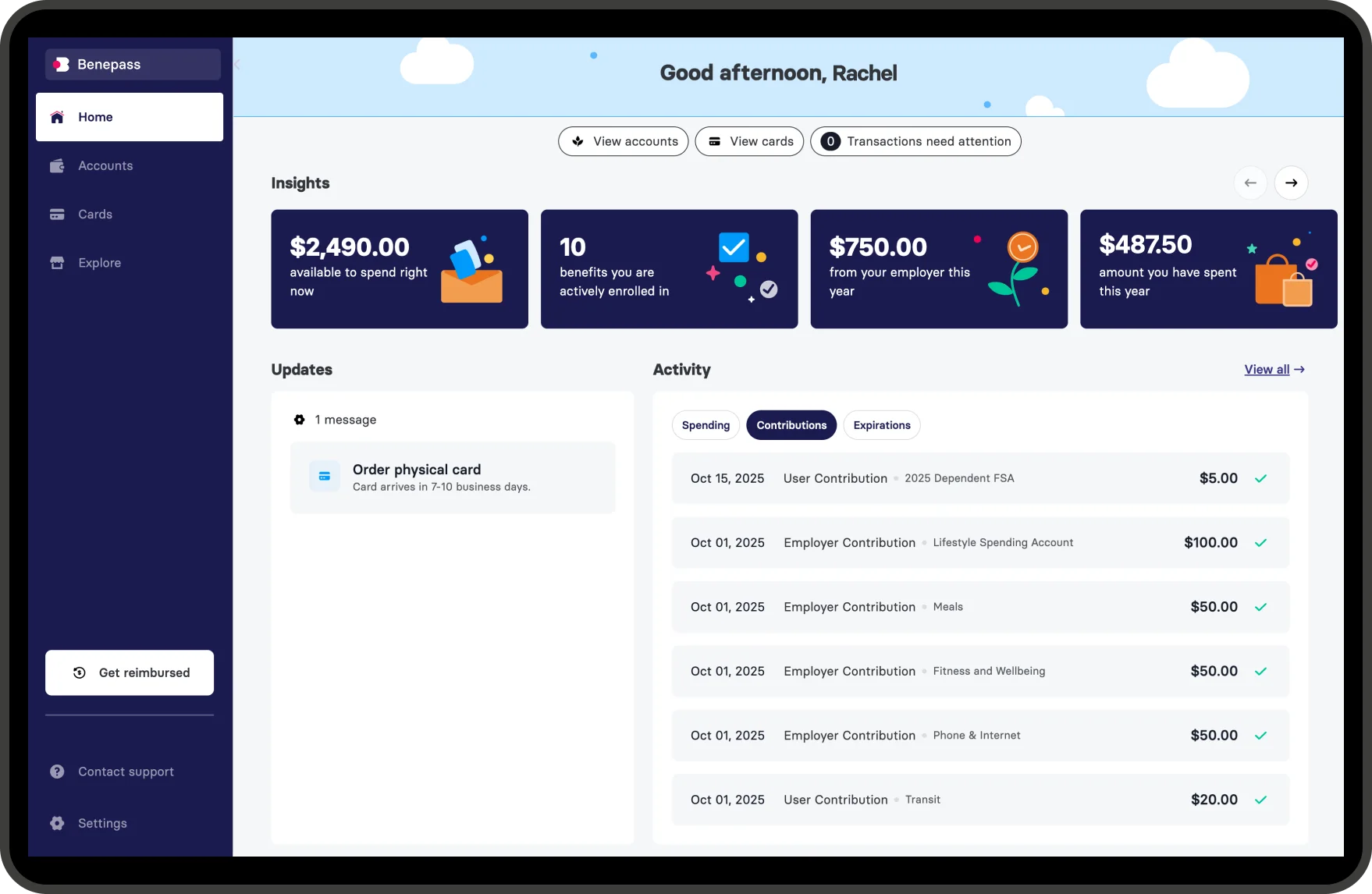
- Lifestyle and flexible benefits platforms let you fund stipends, perks, and wellness programs that don't fit neatly into insurance or pre-tax categories, such as gym memberships, mental health apps, student loan assistance, or remote work stipends. These platforms give employees choice within employer-defined budgets and often include a card or app for easy access.
Which category fits your organization?
Your platform choice depends on the scope of benefits packages you offer, the level of customization your population needs, and whether you're managing programs domestically or across multiple countries.
- Benefits administration platforms fit organizations with 200 or more employees offering traditional group coverage where standardization matters more than personalization.
- Pre-tax account administrators are the right fit if FSAs, HSAs, HRAs, or commuter benefits represent the majority of your benefits spend.
- Total rewards platforms work best when you already have strong benefits administration infrastructure and want to improve how employees total compensation.
- Lifestyle and flexible benefits platforms are built for organizations managing remote teams across multiple countries, offering flexible perks budgets, or replacing a patchwork of point solutions with one configurable system.
Most mid-market and enterprise human resources teams find they need capabilities from more than one category, which is why integration depth and vendor consolidation potential matter as much as the platform type itself—and employees are more likely to take advantage with multiple options.
In fact, the 2026 Benepass Benchmarking Report states that employers offering only an FSA average 79% utilization, compared to 85% for employers running both an FSA and a Lifestyle Spending Account on a single platform.
What core capabilities should employee benefits technology include?
The capabilities below are the baseline requirements for any vendor you bring into your stack. If the platform is a poor fit, it’ll negatively affect your participation rates, your team's workload during open enrollment, and the number of payroll corrections you process each month.
Open enrollment and life event management
Your platform should handle the full enrollment lifecycle, not just the annual open enrollment window. That means supporting mid-year qualifying life events such as marriage, birth, adoption, and loss of coverage with automated eligibility rule enforcement, deadline tracking, and carrier file generation. Good execution looks like an employee reporting a new dependent on a Friday and the system automatically triggering a 30-day election window, notifying the employee, and queuing the carrier update without HR intervention.
Strong platforms also include document upload workflows where:
- Employees submit marriage certificates or birth records directly in the system
- Time-stamped audit trails that prove when a life event was reported and processed
- Automated notifications to payroll and carriers so coverage changes take effect on the correct date
Legacy systems that require HR to manually track life event deadlines in spreadsheets don't scale past 200 employees and create compliance exposure every time a deadline is missed.
Eligibility workflows and account/carrier connectivity
Your benefits platform needs to keep eligibility data synchronized across every system that touches employee benefits. When an employee gets married, moves to a new state, or adds a dependent, eligibility rules change immediately. If your platform can't push those updates to your HRIS, payroll, and carrier systems automatically, you're managing exceptions manually and errors compound fast.
Look for platforms that support:
- Bi-directional HRIS sync
- Real-time payroll connectivity that adjusts pre-tax deductions when employees change coverage mid-year
- Carrier file automation that generates EDI 834 enrollment files in the format each carrier requires
- SSO provisioning that removes access for termed employees without manual intervention
When evaluating vendors, ask how they handle multi-state eligibility rules, part-time employee thresholds, and dependent age-out scenarios.
Employee decision support and personalization
Most employees make benefits decisions once a year under time pressure, often defaulting to the same elections and leaving money on the table. Modern employee benefits technology addresses this with decision support tools that guide employees toward better choices in real time for a better employee experience.
Plan recommendation engines use employee inputs such as age, family status, and expected healthcare usage to suggest which medical plan or FSA contribution level makes the most financial sense. Platforms that offer personalized nudges, like reminding an employee they have $200 in unused FSA funds before year-end, drive higher utilization and satisfaction.
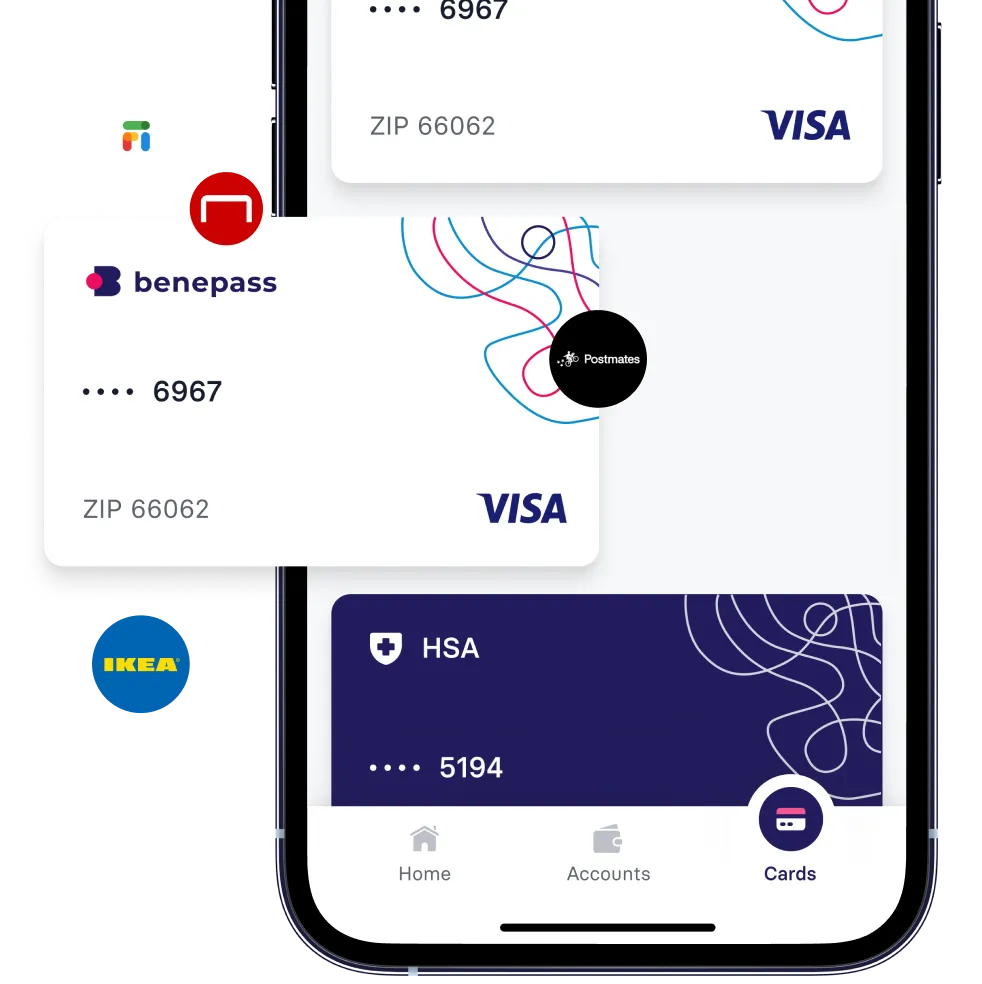
Benepass, for example, supports personalized benefit access across FSA, HSA, LSA, HRA, and commuter programs through a single card and app. Employees see their available balances in one place, receive spending suggestions tailored to their enrolled accounts, and get real-time approval for eligible purchases without filing paper claims.
How does AI factor into modern benefits technology?
AI is showing up in employee benefits technology in four practical ways:
- Plan recommendation engines that suggest coverage options based on employee demographics and past elections
- Claims pattern analysis that flags unusual spending
- Enrollment nudges that remind employees to complete forms before deadlines
- Chatbot support that answers common questions about plan details or account balances
These applications can genuinely reduce administrative workload when they're built on solid data and designed with compliance guardrails.
The challenge is separating useful AI from marketing noise. Many vendors advertise AI capabilities that amount to basic decision trees or keyword-matching chatbots. Others deploy models trained on generic datasets that don't reflect your workforce's actual needs or plan designs, leading to recommendations that miss the mark on eligibility rules or tax treatment.
Use this three-part test to evaluate AI features:
- Ask what data the model is trained on and whether it includes your employee population.
- Confirm how the vendor handles data privacy and model governance, including where data is stored, how models are audited, and whether employee information is used to train models that serve other clients.
- Confirm there's a human-in-the-loop for any compliance-sensitive output. AI should surface recommendations and explanations, not make final eligibility, tax, or substantiation decisions on its own.
How a vendor answers those three questions tells you whether their AI is a functional capability or a marketing claim.
How do you build an evaluation framework for benefits technology?
A structured evaluation framework protects you from making a decision based on a sales pitch alone. The three criteria that consistently predict long-term platform fit are technical integration requirements, security and compliance posture, and measurable ROI.
Integration requirements: HRIS, payroll, SSO, and carriers
Start by mapping your current tech stack and identifying every system that needs to exchange data with your benefits platform. Most mid-market and enterprise HR teams need connectivity across:
- HRIS platforms like Workday, BambooHR, or ADP Workforce Now
- Payroll systems
- Single sign-on providers
- Insurance carriers
Ask vendors for a list of pre-built integrations and confirm whether custom API work is required for your specific configuration.
For instance, Benepass is built on proprietary fintech infrastructure that supports compliant benefits administration for more than 550,000 employees across 90+ countries, with pre-built connectivity for HRIS, payroll, SSO, and major carriers.
Security, compliance, and vendor risk criteria
Benefits platforms handle sensitive information, like:
- Health status
- Dependent details
- Bank routing numbers
- Pre-tax election amounts
Start with SOC 2 Type II certification, which confirms the vendor has undergone an independent audit of their security controls. Ask for a copy of the report and review the scope to confirm it covers all the modules you'll be using.
Confirm the vendor's compliance coverage matches your workforce footprint:
- If you have employees in multiple states, the platform needs to stay current with state-specific pre-tax contribution limits and substantiation rules.
- If you operate internationally, the vendor should demonstrate compliant administration in each country where you'll deploy.
Also confirm that employee data is encrypted both in transit and at rest, and ask about data retention and deletion policies for former employees. Build a scorecard to apply consistently across every vendor you evaluate, including:
- SOC 2 status
- Compliance scope
- Encryption standards
- Data residency
ROI and KPIs that justify the investment
Finance and executive stakeholders need proof that the investment will reduce costs and improve outcomes.
Start by tracking benefits administration cost per employee. Calculate your loaded benefits administration cost per employee, including HR staff time, vendor fees, and error correction.
Employee participation rates in pre-tax accounts and voluntary benefits are another critical indicator. Platforms with guided decision support and mobile-first experiences routinely see participation increases, which translates directly to tax savings for both the employer and the workforce.
Round out your KPI set with:
- Open enrollment completion rates
- Error rates in carrier file submissions
- Time-to-resolution for benefits inquiries
When you present these metrics to finance, frame them around three outcomes:
- Lower administrative burden
- Higher employee engagement
- Reduced compliance risk
How do you implement benefits technology without disrupting open enrollment?
Successful implementation depends on sequencing your platform launch around open enrollment deadlines. Map backward from your enrollment window: if open enrollment opens November 1, your new platform needs to be fully tested and employee-facing by mid-October at the latest, which means data migration and carrier file exchanges should be complete by early September.
Here are a few implementation timelines to keep in mind:
- Data migration (4–6 weeks). It can take time to extract historical enrollment data from your current system, map it to your new platform's data structure, and validate that eligibility rules, contribution amounts, and dependent records transferred correctly. If you're moving from spreadsheets or a legacy system without clean APIs, it can take longer with manual cleanup.
- Carrier file testing (4–12 weeks). Most carriers need several weeks to test EDI file formats with a new vendor, depending on plan complexity and carrier responsiveness, and they won't process live enrollments until testing is complete. If you're working with multiple carriers, stagger your testing schedule so you're not waiting on several vendors simultaneously.
- Employee communication (3 weeks). This should start before the platform goes live. Send a teaser email three weeks out explaining what's changing and why, followed by a detailed walkthrough one week before launch that includes login instructions and a clear timeline for when employees need to take action.
For mid-market employers, expect 8 to 12 weeks from contract signature to employee-facing launch. Enterprise organizations with multi-carrier configurations, global populations, or complex eligibility rules should plan for 12 to 16 weeks minimum.
If open enrollment is fewer than 12 weeks away, consider a phased launch: implement the new system for a subset of benefits this cycle, then expand to full enrollment next year.
Key takeaways for optimizing your benefits technology strategy
Choosing the right employee benefits solution comes down to matching the platform category to your actual pain points. Benefits administration technology, pre-tax account administrators, total rewards platforms, and lifestyle benefits platforms each solve different problems.
Your platform should also connect directly to your HRIS, payroll system, SSO provider, and carriers without requiring manual file uploads or weekly reconciliation. Evaluate AI features with a critical eye by asking vendors what data their models are trained on, how they handle privacy and governance, and whether a human reviews compliance-sensitive outputs before they reach employees.
If you’re looking to streamline your benefits management and provide more personalized assistance to your employees, consider Benepass. It’s built in-house and can accommodate several benefit types, and it includes AI capabilities to ease the employer and employee benefits experience across the board.
See how it can help your HR team with pre-tax accounts and lifestyle spending accounts, and request a demo today.
Frequently asked questions about employee benefits technology
How long does it take to implement employee benefits technology?
Most mid-market employers should expect an 8 to 16 week implementation timeline, though global or multi-carrier configurations often take longer. The timeline depends on how clean your employee data is, how many carrier and payroll integrations you need, and whether you're launching during or outside of open enrollment. You can reduce delays by starting data cleanup at least 12 weeks before your target launch date and building in a four-week buffer for carrier file testing.
What is the difference between a benefits administration platform and a total rewards platform?
Benefits administration platforms are transactional, and total rewards platforms are informational. A benefits administration platform manages the enrollment, eligibility, and carrier connectivity for your core health plans, as well as dental, vision, and insurance programs. A total rewards platform aggregates and communicates the full value of everything you offer, including compensation, equity, retirement plans, perks, and professional development, in a single employee-facing view.
How do I evaluate AI features in a benefits technology platform safely?
Start by asking what data the AI model is trained on and whether it includes your specific employee population, then confirm how the vendor handles data privacy and model governance, specifically whether employee data is used to train models that serve other clients and what audit trail exists for AI-generated outputs.
Lastly, confirm there's a human-in-the-loop for any compliance-sensitive decision. AI should surface recommendations and explanations, not make final eligibility, tax treatment, or substantiation decisions on its own.
Ready to learn more about Benepass? Book your demo today.

Frequently Asked Questions