In this post
Lorem ipsum dolor sit amet
Lorem ipsum dolor sit amet
According to Benepass's 2026 Benefits Benchmarking Report, 88% of workers report weekly financial concerns, and the benefits infrastructure most employers run wasn't built to respond to that kind of everyday pressure. For HR and Total Rewards leaders managing distributed workforces, that number reflects a real operational problem: the wrong benefits infrastructure creates friction for employees and administrative drag for your team.
Choosing the right flexible benefits platform shapes employee engagement, finance operations, and your team's daily workload for the length of the contract. This guide gives you the evaluation criteria, vendor questions, and rollout guidance to make a defensible recommendation internally.
What is a flexible benefits platform?
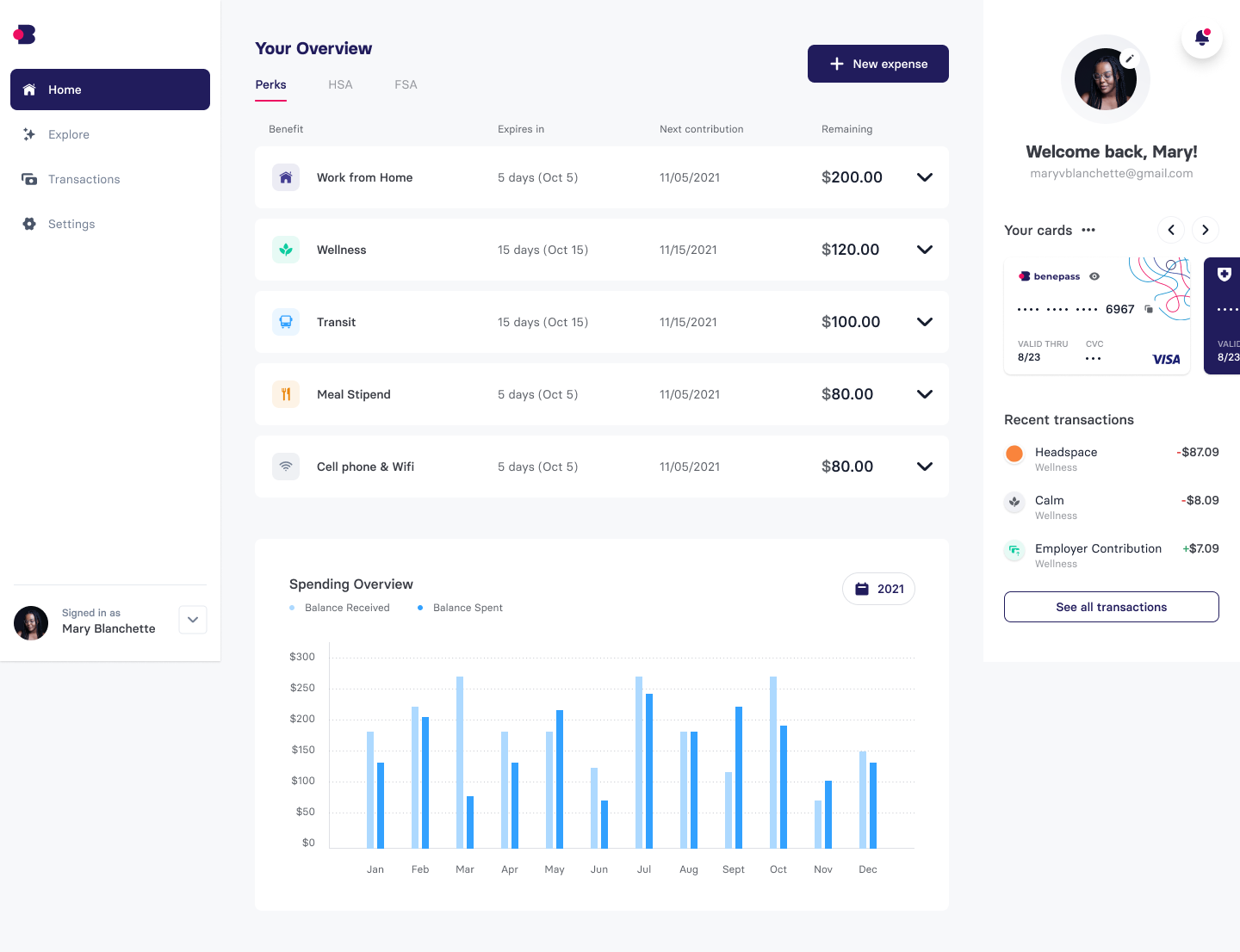
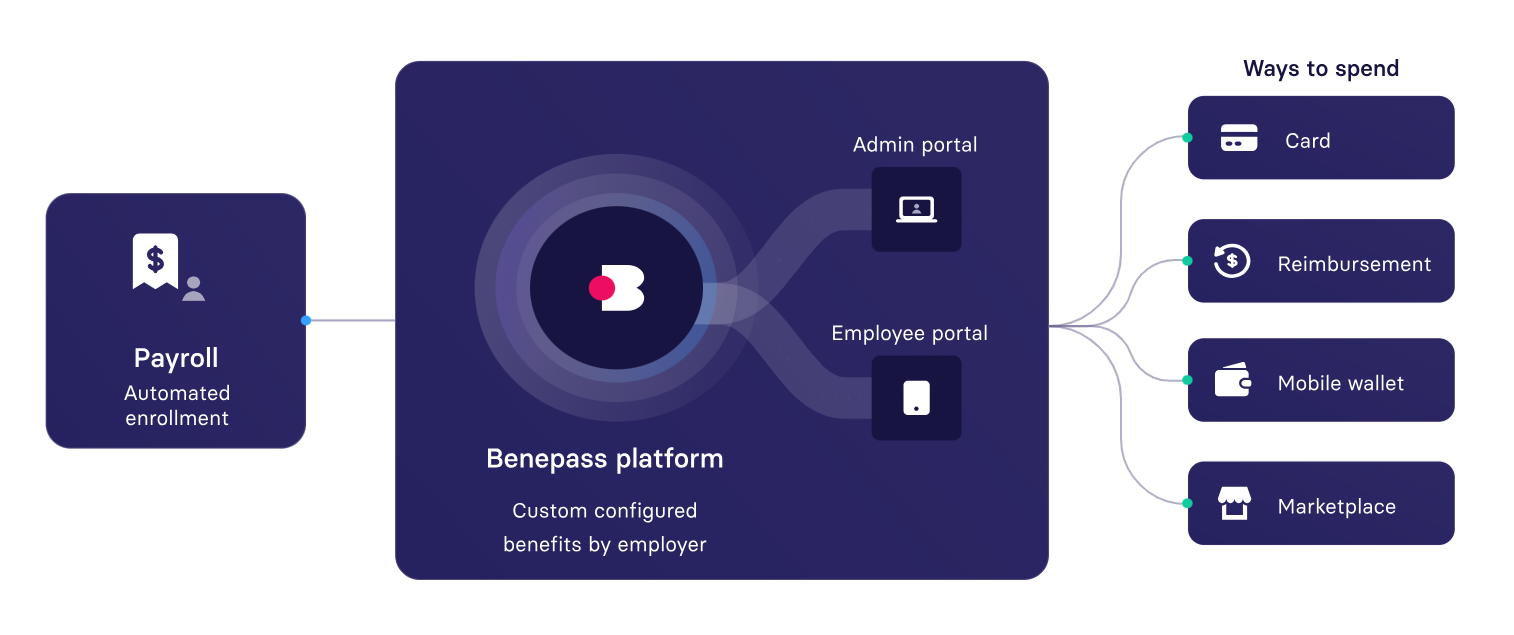
A flexible benefits platform is a centralized system for configuring, funding, and administering multiple benefit types from one interface, with employees accessing their funds through a single card or mobile app. Instead of managing separate vendors for healthcare benefits like flexible spending accounts (FSAs) or health savings accounts (HSAs), wellness programs, and taxable perks, you consolidate program setup, eligibility rules, budget allocation, and reimbursement workflows in one streamlined place.
This is fundamentally different from a traditional pre-tax benefits administrator. Legacy administrators typically handle only IRS-defined accounts, like FSAs and HSAs, with rigid plan designs, standard contribution limits, narrow expense categories, and manual processes for anything outside the core pre-tax framework.
Want to add a wellness stipend, a remote work allowance, or country-specific benefits for international employees? You're building a separate process or bringing in another vendor.
A flexible employee benefits platform supports broad functionality and customization across benefit categories and geographies. You can define custom spending categories, set different budget amounts by employee segment or location, and layer taxable and pre-tax programs together without fragmenting administration. For distributed or global teams, that means running U.S. pre-tax accounts alongside taxable lifestyle benefits in Canada, the U.K., or other markets from the same system, with one employee experience and one set of reporting dashboards.
Fragmented vendors create administrative drag, low utilization, and compliance risk. Employees navigating multiple portals, cards, and reimbursement processes disengage. HR teams stitching together data from three or four systems lose visibility and control. A well-designed platform reduces that burden while giving employees more meaningful choices.
How to evaluate a flexible benefits platform
Choosing a flexible benefits platform touches employee engagement, finance operations, compliance risk, and your team's daily workload. Before you commit to a multi-year contract, pressure-test four functional areas that determine whether a platform will be user-friendly enough to reduce administrative drag versus create more of it.
Employee experience and program configuration
The employee-facing side of your platform determines whether your programs get used or ignored. Test the employee interface during your demo and ask:
- Can someone figure out how to use their wellness stipend in under two minutes?
- Is the mobile experience functional, or does it force employees to log in on desktop?
Look for platforms that support both card-based spending and reimbursement workflows. A gym membership might make sense as a recurring card charge, while a one-time ergonomic desk setup is easier to handle as a reimbursement with receipt upload.
On the admin side, evaluate how much configuration flexibility you actually get:
- Can you set up different benefit programs by location, department, or employment status without building a separate plan for each group?
- Can you adjust eligible expense categories mid-year?
The best platforms let you define spending rules, set rollover policies, and update eligibility criteria through an admin dashboard, not through a support ticket that takes three weeks to process.
Budget controls, reimbursement models, and finance oversight
Your finance team needs to know exactly where benefit dollars are going before funds are spent. Confirm the platform supports budget allocation at multiple levels:
- By employee
- By department
- By benefit category
- By time period
If you're managing global benefits across multiple countries, verify that the platform handles multicurrency funding and converts balances accurately for both employees and finance reporting.
Reimbursement model flexibility matters, too. Some platforms only support post-purchase reimbursement, which creates delays for employees. Others offer pre-funded debit cards that draw directly from allocated budgets, significantly reducing manual claims processing. Ask vendors how they handle edge cases:
- What happens when an employee submits a claim that exceeds their remaining balance?
- How quickly do unused funds roll back into your budget at the end of a plan year?
You also need to consider exportable data and reconciliation. Look for benefits solution platforms that provide exportable transaction data with line-item detail formatted for your accounting system. Real-time dashboards help spot-check utilization, but your finance team will need comma-separated values (CSVs) or API access to reconcile benefits spending with payroll, tax filings, and annual budgets.
Integrations, SSO, and security due diligence
A flexible benefits platform should connect to your human resource information system (HRIS), payroll system, and identity provider without requiring custom development or ongoing file uploads. Look for vendors that support direct API connections to platforms like Workday, ADP, BambooHR, Rippling, or Gusto, rather than relying on manual CSV uploads or third-party middleware that adds latency and error risk.
Single sign-on (SSO) support is non-negotiable if you want high adoption rates. Employees should be able to access their benefit plans through your existing identity provider (Okta, Azure AD, Google Workspace) without creating another username and password.
On the security side, confirm that the vendor is:
- SOC 2 Type II certified
- PCI-DSS compliant if it handles payment card data
- GDPR-ready if you have employees in the EU
Ask about data ownership and portability, too. You should retain full ownership of your employee data, and the vendor should provide clear documentation on how you can export records if you switch platforms. This protects your organization from vendor lock-in and ensures you can meet audit or legal discovery requests without depending on the vendor's timeline.
Compliance and tax handling
The wrong platform can expose your organization to IRS penalties, state tax violations, or documentation gaps that surface during audits, and those risks multiply when you're running programs across multiple states or countries. A strong platform handles tax classification automatically based on the benefit type and employee location.
Here's what to verify during your evaluation:
- Automated tax treatment by benefit type: The platform should apply the correct tax status to each benefit category without requiring manual intervention from your payroll or finance team.
- Real-time eligibility verification: Look for systems that enforce IRS-compliant eligibility rules, so employees can't submit ineligible claims. For example, the IRS increased the 2026 health FSA salary reduction limit to $3,400 and the maximum carryover amount to $680.
- Audit-ready documentation: Every transaction should generate a timestamped record with receipt images, merchant details, and approval workflows you can export for IRS or state audits.
- Multi-jurisdiction support: The platform must handle varying tax rules, contribution limits, and reporting requirements without creating separate admin workflows for each location.
- Payroll integration for deductions: Your platform should sync directly with your payroll system to ensure deductions are reflected correctly and reported to the IRS.
Ask vendors how they keep pace with regulatory changes. Tax rules for benefits shift regularly, and a platform that requires you to manually update compliance rules is a liability. For global teams, you'll need a platform that understands local tax treatment, funds benefits in multiple currencies, and generates country-specific reporting without requiring separate administrators in each country.
What to ask flexible benefits vendors before you sign
Before you commit to a vendor, pressure-test how the platform will actually work in your environment, not just during the demo, but six months in when you're managing mid-year eligibility changes or explaining a compliance question to finance.
Implementation and data ownership
- What does the implementation timeline look like, and what internal resources do you need from our side?
- Who owns employee data once it's in your system, and what happens to that data if we switch vendors?
- Can we export transaction-level data at any time, and in what format?
- How do you handle employee eligibility updates mid-year (new hires, terminations, status changes)?
Support model and fee structure
- What does your support model look like after go-live? Is there a dedicated account manager, or do we submit tickets?
- Are there additional fees for plan changes, custom configurations, or adding new benefit categories mid-contract?
- What's included in your base fee versus what requires an add-on?
Program flexibility and change management
- Can we adjust benefit allocations, eligibility rules, or program categories mid-year without a full re-implementation?
- How do you handle employees who move between states or countries during the plan year?
- If we want to pilot a new or better benefit type with a subset of employees, can your platform support that?
Global and distributed team considerations
- How do you handle multicurrency funding and reimbursements?
- Do you support local tax compliance in the countries where we operate, or do we need to manage that separately?
- Can you enforce country-specific program restrictions (e.g., certain benefits available only in certain geographies)?
- How do you handle exchange rate fluctuations for global allocations?
If a vendor can't answer these questions clearly during the sales process, that's a signal about what ongoing support will look like.
How to roll out a flexible benefits platform without losing employee adoption
A flexible benefits platform is only as valuable as the number of employees who actually use it. The difference between a 30% adoption rate and an 80% adoption rate often comes down to how you approach the rollout.
Start with internal alignment before you announce anything. Before you send a single employee communication, make sure your leadership team, finance, and department heads understand what's changing and why. Schedule a brief orientation session for people leaders at least two weeks before the employee launch, and give them talking points they can use in team meetings.
Segment your communication by employee population. A remote worker with a family may care most about dependent care FSAs and wellness stipends, while an in-office employee might prioritize commuter benefits or fitness reimbursements. Tailor your launch emails, webinars, and FAQ documents to address the benefits most relevant to each segment. If your workforce spans multiple countries, make sure your communications reflect local program rules and available benefit categories.
Make the first interaction as simple as possible. Provide step-by-step instructions for account setup, card activation, and how to submit a reimbursement or make a purchase. Host live Q&A sessions during the first two weeks of the rollout, and make sure your benefits team or vendor support is staffed to handle higher-than-usual inquiry volume.
Track utilization in the first 90 days and adjust. Benepass clients consistently achieve 80%+ benefit utilization, a benchmark worth using when you build your internal adoption goals. Monitor account activation rates, card usage, reimbursement submission volume, and which benefit categories are seeing the most activity. Use the first quarter as a feedback loop to refine messaging and address friction points before they become long-term barriers to benefits utilization.
How to decide if a flexible benefits platform fits your organization
A flexible benefits platform makes sense for organizations managing multiple benefit options, supporting distributed or global teams, or seeing low utilization from legacy vendors. If your current setup involves juggling separate vendors for FSAs, wellness stipends, childcare benefits, commuter benefits, and lifestyle spending accounts, or if you're manually tracking reimbursements across spreadsheets, you're likely ready for a more unified approach.
This matters because benefits remain a major workforce priority: SHRM’s 2024 Employee Benefits Survey found that 97% of employers provide some form of health plan coverage.
Work through four questions to decide if it's the right fit:
- Workforce size and geographic footprint. Mid-market and large employers, especially those with distributed or global teams, benefit most from platforms that manage funding, tax rules, and program restrictions across locations without adding regional vendors.
- Benefit program complexity. If you're offering more than two or three benefit packages or types, a flexible benefits platform consolidates administration and gives employees a clearer view of what's available.
- Current vendor performance. Consider whether your current vendor limits utilization or creates compliance risk. Low participation, frequent access questions, and manual reimbursement workarounds all suggest the setup isn’t working.
- Internal capacity for ongoing administration. If your HR or Total Rewards team is spending hours each week on manual eligibility updates or mid-year plan changes, a platform with automated configuration and real-time reporting frees you to focus on strategy.
Benepass is built for mid-market to large employers running benefits across multiple countries and program types with one platform, one card, and an administration model that reduces manual overhead while giving employees real flexibility.
See how Benepass helps HR teams launch and manage flexible benefits from one configurable platform.
Frequently asked questions about flexible benefits platforms
What is the difference between a flexible benefits platform and a pre-tax benefits administrator?
A flexible benefits platform lets you configure and administer multiple benefit types from one system, with employees accessing all their funds through a single card or app. A traditional pre-tax benefits administrator handles only IRS-defined accounts, like FSAs and HSAs, with limited configurability and no support for taxable or global programs. If your benefits strategy goes beyond standard pre-tax offerings or managing a distributed workforce, a flexible benefits platform gives you the configurability that legacy administrators can't deliver. Learn more about benefits administration software options.
Which flexible benefits platforms support global or distributed teams?
Platforms built for global or distributed teams should handle multicurrency funding, local tax compliance, and country-specific program restrictions without requiring you to add additional vendors. Look for vendors that support both pre-tax and taxable benefits in the same system, offer localized employee experiences, and provide clear documentation on how they handle tax reporting and compliance in each country where you operate. During your evaluation, ask vendors directly how they handle cross-border benefits administration, what countries they currently support, and whether they can accommodate your specific geographic footprint without adding complexity on your end.
How long does it typically take to implement a flexible benefits platform?
Most flexible benefits platforms can be live within four to eight weeks of contract signing, though timelines vary based on your organization's size, the number of benefit programs you're configuring, and how many system integrations you need. The process typically includes data migration, HRIS and payroll integration setup, program configuration, and employee communication planning. Vendors with strong implementation support will provide a dedicated project manager, clear milestone timelines, and pre-built templates for common benefit types to accelerate setup. If you're replacing a legacy vendor or consolidating multiple systems, plan for the longer end of that range.

Frequently Asked Questions